
Helping an aging parent start therapy or counseling
By David Reyes · Updated 2026-07-10
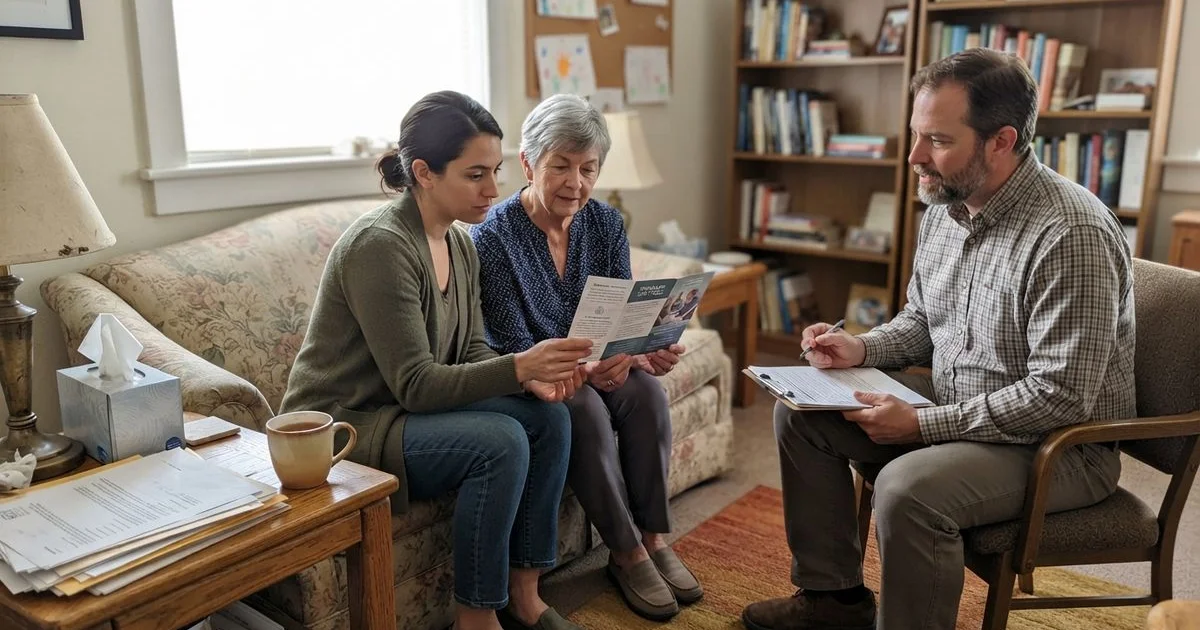
Suggesting therapy to an aging parent often runs into a wall that has nothing to do with whether they need it. Many older adults grew up with a very different relationship to mental health support, and the idea itself can feel foreign or even insulting to bring up directly. Here’s a more workable way to approach it.
Understand the resistance before pushing past it
For many people in their 70s, 80s, or beyond, “therapy” carries associations with being labeled as having something seriously wrong with them, not the more everyday, practical framing younger generations tend to use. Some common underlying concerns worth anticipating:
- A belief that seeking help is a sign of weakness or failure
- Concern about what it means if word gets out to friends or family
- Skepticism that talking to a stranger could actually help
- Simple unfamiliarity with what a counseling session even involves
Naming these concerns out loud, rather than assuming they’ll come around once you explain the benefits, tends to go further.
| Framing that tends to backfire | Framing that tends to work |
|---|---|
| “You need therapy.” | “Would you be open to talking to someone about the sleep issues you mentioned?” |
| Bringing it up in front of other family members | A private, one-on-one conversation |
| Presenting it as a final decision | Presenting it as one session, no obligation to continue |
| Focusing on what’s “wrong” with them | Focusing on a specific, practical situation they’ve already named as hard |
Framing that tends to work better
Leading with “you need therapy” often triggers defensiveness. Leading with a specific, practical problem tends to land better:
- “You mentioned you haven’t been sleeping well since the move. Some people find it helps to talk that through with someone.”
- “A lot of people find it easier to adjust to retirement with some outside support. Would you be open to trying one session?”
- “I’ve read that a counselor can help with the kind of stuff you’ve been dealing with since Dad passed. Would you consider it, just to see?”
Framing it around a concrete situation, sleep, a transition, grief, rather than mental health as an abstract category, is often the difference between a conversation that goes somewhere and one that shuts down immediately.
What to expect if they agree to try it
- A first session is exploratory. There’s no obligation to continue if it doesn’t feel right.
- Privacy is standard. Don’t expect, or push for, detailed reports back from the counselor.
- It’s common for an older adult to need more than one attempt, sometimes with a different counselor, before finding a fit that works.
- Practical framing, like managing a specific life change, tends to hold up better session to session than an open-ended goal of “feeling better” in general.
Your own role in the process
Helping a parent get to a first appointment is often the hardest part. Once that’s done, stepping back and letting the counseling relationship be theirs, not something you monitor or manage, tends to work better for everyone. If they want to share what’s going on, that’s their choice. Checking in occasionally about how it’s going is reasonable. Asking for details from the sessions themselves generally isn’t.
The same balance, being supportive without taking over, comes up when it’s a partner in therapy rather than a parent. Our guide on supporting a partner through therapy covers where that line usually sits.
Practical barriers worth clearing first
Sometimes resistance isn’t really about the idea of therapy at all. It’s about logistics: not knowing how to schedule an appointment, being uneasy about driving somewhere new, or not having anyone to help fill out paperwork online. It’s worth asking directly whether any of these smaller, practical things are actually what’s holding them back, since they’re often easier to solve than the underlying reluctance about therapy itself. Offering to help book the first appointment or fill out the intake forms together can remove enough friction to get past a stuck point.
If health changes are part of the picture
Cognitive changes, mobility issues, or a new medical diagnosis sometimes complicate the picture further, since it may not be clear whether what you’re noticing is primarily emotional or has a medical component that needs separate attention. A conversation with their primary care doctor alongside a counselor referral can help sort out which concerns belong where, rather than guessing on your own which type of provider to start with.
If cost is part of the hesitation, it’s worth looking into whether their insurance, including Medicare, covers outpatient counseling before assuming affordability is a barrier.
Columbia SC Counselor Guide lists local providers experienced with older adults, evaluated using our scoring method, which can help you find someone who’s a genuine fit rather than the first name that comes up.
Frequently asked questions
- Why do so many older adults resist the idea of therapy?
- Many grew up in a generation where mental health support carried more stigma, or where 'therapy' wasn't a familiar concept at all. Framing it around a practical goal, like sleep or adjusting to a life change, often lands better than framing it around mental health in the abstract.
- Should I sit in on my parent's counseling sessions?
- Usually no, at least not routinely. Most counseling for adults, including older adults, works best with privacy. A counselor may invite family involvement for specific sessions if it would help, but that should be their call, not a default.
- What if my parent agrees to one session but refuses to go back?
- That's common and not necessarily a dead end. Ask what specifically didn't work, whether it was the counselor, the format, or the whole idea, and consider whether a different counselor or a different framing might work better before giving up entirely.
- Is it normal for an older adult to need counseling for the first time later in life?
- Very. Life changes like retirement, losing a spouse, or health changes can bring up things that never needed addressing before. Starting counseling for the first time at 70 or 80 isn't unusual, and plenty of counselors specialize in exactly this stage of life.