
What to expect at your first counseling appointment
By David Reyes · Updated 2026-06-03

Booking the appointment is often the hardest part. Once it’s on the calendar, most of the anxiety about counseling comes from not knowing what actually happens in the room. Here’s a realistic walkthrough of a first visit, from paperwork to what you can expect once you leave.
This is general information, not a substitute for guidance from your own counselor or physician about your specific situation.
Before you arrive
Most practices in the Columbia area send new-client forms by email or a client portal a day or two before your appointment. These typically cover:
- Contact and emergency contact information
- Insurance details, if you’re using coverage
- A brief health and mental health history
- Consent forms and practice policies (cancellation windows, fees, confidentiality limits)
Filling these out ahead of time means less time spent on logistics once you’re face to face with the counselor, and more time actually talking. If a practice doesn’t send anything in advance, plan to arrive 15 minutes early to complete paperwork on-site.
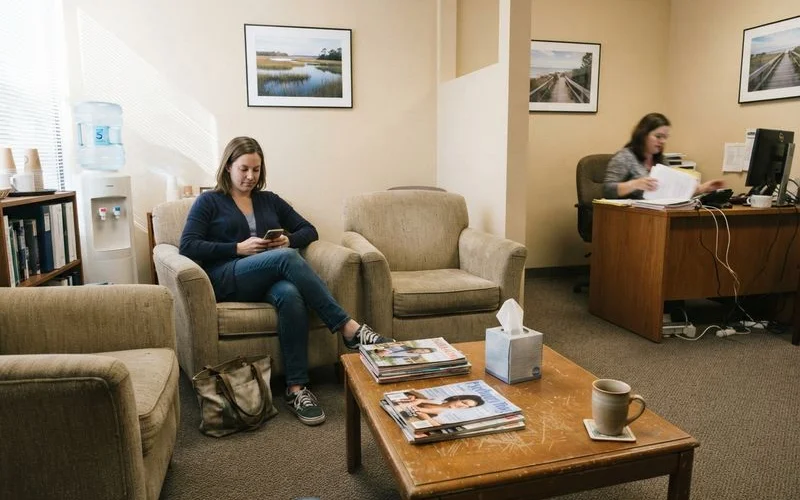
What a first session actually looks like
The first appointment is usually called an intake. The counselor’s main job in that hour is to understand your situation well enough to plan how to help, not to solve everything at once.
| Stage | Roughly how long | What happens |
|---|---|---|
| Check-in and paperwork | 5-10 minutes | Confirming forms, insurance, and practice policies |
| History and current concerns | 25-35 minutes | The counselor asks about what brought you in, relevant background, and current symptoms |
| Goals and approach | 10-15 minutes | Discussing what you want out of counseling and how the counselor typically works |
| Next steps | 5-10 minutes | Scheduling, homework if any, and answering your questions |
Expect open-ended questions rather than a checklist: how long you’ve felt this way, what’s changed recently, what support you already have, and what you’re hoping is different in a few months. You control how much detail you share. A good counselor will follow your pace rather than push.
What to bring
- Photo ID and insurance card
- A short list of medications, if any, including dosages
- Notes on what you want to cover, since it’s easy to forget in the moment
- Questions about the counselor’s approach, availability, and fees
You don’t need a polished summary of your life story. Rough notes are enough, and most counselors will ask follow-up questions rather than expect a prepared speech.
What if you get nervous and blank on what to say
This happens more often than people expect, even to those who prepared notes. A good counselor is used to filling silence with an easier question rather than waiting you out. If you freeze, it’s fine to say exactly that: “I had things I wanted to say and now I’m blanking.” That sentence alone tells the counselor plenty and gets the conversation moving again without any pressure to perform.
After the session
You typically won’t leave with a diagnosis or a finished treatment plan. What you should leave with is a sense of whether you can talk to this person, and a rough idea of next steps: how often to come back, whether other providers should be involved, and what, if anything, to try before the next visit.
Between the first and second session, it’s normal to keep thinking about things you didn’t say, or to feel a bit raw after talking about something you usually keep to yourself. That reaction tends to settle within a day or two and isn’t a sign anything went wrong.
If you’re deciding between counselors, our scoring method explains how listings on this site are evaluated, which can help you compare options before you book.
Questions worth asking in your first session
- What’s your general approach or style?
- How do you typically measure progress?
- What does a typical course of counseling look like for something like mine?
- How do cancellations, no-shows, and between-session contact work?
Asking these early saves friction later, especially around billing and scheduling, which are the most common sources of frustration once counseling is underway.
When it isn’t a fit
Sometimes the mismatch is obvious in one visit: a communication style that doesn’t work, a specialty that doesn’t match your needs, or scheduling that doesn’t line up with your life. Other times it takes two or three sessions to know for sure. Either way, switching counselors partway through isn’t unusual, and a good practice will help you find a better fit rather than take it personally.
For a broader look at the counselors serving the area, Columbia SC Counselor Guide tracks listings and reviews so you can compare options before committing to a first appointment.
Frequently asked questions
- Do I need to prepare anything before my first session?
- Bring a photo ID, your insurance card if you have one, and a rough list of what you want to talk about. Most practices also send new-client paperwork by email a day or two beforehand, so set aside 10-15 minutes to fill it out before you arrive.
- How long does a first counseling session last?
- Most intake sessions run 50-60 minutes, sometimes closer to 90 minutes for a first visit with a psychologist or specialist. Expect the actual conversation time to be a bit shorter once paperwork and logistics are handled.
- Will the counselor tell me what's wrong with me in the first session?
- Rarely, and that's normal. A first session is mostly information gathering. A counselor who hands you a diagnosis or a fixed treatment plan in one hour, before knowing your history, is moving faster than the work usually allows.
- What if I don't feel comfortable with the counselor after the first visit?
- That happens often and it isn't a failure on your part. Fit matters more in counseling than in most services. Most people try a second session before deciding, but if something feels off, you're free to look elsewhere.